
The Vista 20P programming manual is crucial for harnessing its full potential. This guide details setup, operation, and troubleshooting for optimal performance.
What is the Vista 20P?
The Vista 20P is a powerful and versatile programmable logic controller (PLC) widely utilized in industrial automation applications. Designed for robust performance and reliability, it excels in controlling various processes, from simple machine operations to complex manufacturing systems. It’s a compact, modular system, allowing for scalability and customization to meet specific project requirements.
At its core, the Vista 20P utilizes a microprocessor to execute user-defined programs, typically written in ladder logic, function block diagram, or structured text. These programs dictate the PLC’s behavior, responding to input signals from sensors and controlling output devices like motors, valves, and lights. The system boasts a range of input/output (I/O) modules, supporting diverse signal types – digital, analog, and specialized communication protocols.
Its applications span across numerous industries, including manufacturing, packaging, building automation, and water treatment. The Vista 20P’s ability to provide precise control, data logging, and remote monitoring makes it an indispensable component in modern automated environments. Understanding its capabilities is the first step towards effective programming and implementation.
Why a Programming Manual is Essential
A comprehensive programming manual is absolutely vital when working with the Vista 20P PLC. Attempting to program this system without it is akin to navigating a complex maze blindfolded. The manual unlocks the full potential of the hardware, detailing every function, instruction, and configuration option available.
It provides a structured approach to development, guiding users through the programming process from initial setup to advanced troubleshooting. Crucially, it explains the specific syntax and nuances of the supported programming languages – ladder logic, function block diagram, and structured text – preventing errors and ensuring code efficiency.
Beyond basic programming, the manual details advanced features like timer/counter implementation, data manipulation techniques, and control flow statements. It also serves as an invaluable resource for interpreting error codes and diagnosing common programming issues; Without it, maximizing the Vista 20P’s capabilities and ensuring reliable operation is significantly hampered.
Locating the Vista 20P Programming Manual PDF
Finding the official PDF is straightforward. Several online sources offer direct downloads, ensuring you have the latest version for effective programming guidance.
Official Website Download Links
Accessing the Vista 20P programming manual directly from the manufacturer’s official website is the most reliable and secure method. This ensures you receive the most up-to-date version, free from potential malware or outdated information often found on third-party sites. The download is typically available in PDF format, compatible with most devices.
To locate the manual, navigate to the support or downloads section of the official website. You may need to register for an account or provide your product’s serial number to verify ownership. Look for a dedicated “Manuals” or “Documentation” area, then filter by product – specifically, the Vista 20P.
Direct links can change, so it’s best to start from the homepage. The website often categorizes manuals by product version, so ensure you select the correct one for your specific Vista 20P model. Downloading from the official source guarantees authenticity and access to any supplemental files or updates released by the manufacturer. A clear download button or link will initiate the PDF download process.
Third-Party Repositories (Caution Advised)
While the Vista 20P programming manual can sometimes be found on third-party file-sharing websites and online repositories, exercising extreme caution is paramount. These sources are often unreliable and pose significant security risks, including the potential for malware infections or downloading corrupted files.
Downloading from unofficial sites bypasses the manufacturer’s quality control, meaning the manual may be outdated, incomplete, or even intentionally modified. Always scan any downloaded file with a reputable antivirus program before opening it. Be wary of websites requesting personal information or requiring excessive downloads before granting access to the manual.
Consider these sources as a last resort, and prioritize the official website whenever possible. If you must use a third-party site, research its reputation and read user reviews before downloading. Verify the file size and checksum (if available) against known values to ensure its integrity. Remember, you assume all risks when downloading from unofficial sources.
Checking File Integrity (MD5/SHA Checksums)
After downloading the Vista 20P programming manual PDF, verifying its integrity using MD5 or SHA checksums is a critical security step. These checksums are unique “fingerprints” generated from the file’s contents; any alteration, even a single bit, will result in a different checksum.
The official website, if available, should provide the correct checksum value for the manual. Download this value separately and compare it to the checksum generated from your downloaded file. Numerous free tools are available online and as software downloads to calculate these checksums.
If the checksums match, you can be reasonably confident that the file is authentic and hasn’t been corrupted or tampered with during download. A mismatch indicates a problem – the file may be incomplete, damaged, or infected with malware. In such cases, delete the file and re-download it from a trusted source. This process safeguards against potentially harmful files.
Understanding the Manual’s Structure
The manual is logically organized for efficient learning. It progresses from foundational concepts to advanced techniques, aiding comprehensive understanding of the Vista 20P.
Chapter 1: System Overview
Chapter 1 provides a foundational understanding of the Vista 20P’s architecture and components. It begins with a detailed explanation of the system’s hardware, including the central processing unit (CPU), memory modules, and input/output (I/O) interfaces. Diagrams and illustrations are extensively used to visually represent the system’s internal workings, making complex concepts more accessible.
This chapter also delves into the software architecture, outlining the operating system, programming environment, and communication protocols supported by the Vista 20P. A key focus is on the modular design of the system, highlighting how different components interact to achieve desired functionalities. Understanding this modularity is crucial for effective troubleshooting and customization.
Furthermore, Chapter 1 introduces the core principles of Programmable Logic Controllers (PLCs) and their application in industrial automation. It explains the differences between various PLC types and positions the Vista 20P within this broader context. Finally, it outlines the safety considerations essential when working with the system, emphasizing the importance of adhering to industry standards and best practices.
Chapter 2: Programming Fundamentals
Chapter 2 lays the groundwork for programming the Vista 20P, introducing essential concepts and tools. It begins with a comprehensive overview of the programming languages supported – Ladder Logic, Function Block Diagram (FBD), and Structured Text (ST) – detailing their strengths and weaknesses for different applications. Practical examples illustrate the syntax and structure of each language.
This chapter meticulously explains the data types available within the Vista 20P environment, including integers, floating-point numbers, booleans, and strings. It covers variable declaration, assignment, and scope, emphasizing best practices for data management. The concept of memory addressing and its impact on program performance is also explored.
Furthermore, Chapter 2 details the programming software interface, guiding users through the process of creating, editing, compiling, and downloading programs to the PLC. It introduces debugging tools and techniques for identifying and resolving errors. A strong emphasis is placed on developing a systematic approach to programming, fostering clarity and maintainability.
Chapter 3: Input/Output Configuration
Chapter 3 dives into the critical process of configuring the Vista 20P’s input and output (I/O) modules. It begins with a detailed explanation of the different I/O module types available – digital input, digital output, analog input, and analog output – outlining their specifications and applications. Practical guidance is provided on physically installing and wiring these modules correctly.
The chapter then focuses on the software configuration of I/O points, including assigning names, data types, and addressing schemes. It explains how to define input filters and output scaling to ensure accurate data processing. Special attention is given to configuring high-speed counter inputs and pulse width modulation (PWM) outputs;
Furthermore, Chapter 3 covers the use of I/O simulation tools for testing programs without physical hardware. It details troubleshooting techniques for common I/O configuration issues, such as signal noise and wiring errors. Understanding these concepts is vital for seamless integration with external devices and sensors.
Key Programming Concepts in the Vista 20P
Mastering the core programming languages – Ladder Logic, Function Block Diagram, and Structured Text – unlocks the Vista 20P’s capabilities. These are essential tools.
Ladder Logic Basics
Ladder Logic is a graphical programming language resembling electrical relay diagrams, widely used for Programmable Logic Controllers (PLCs) like the Vista 20P. It represents the control logic as a series of rungs, each representing a control circuit.
Each rung consists of input conditions (contacts) and output coils. Contacts represent sensors or switches, while coils represent actuators or outputs. When the input conditions on a rung are true (closed contacts), the output coil is energized, activating the corresponding output.
Understanding basic elements is key: normally open (NO) and normally closed (NC) contacts, and coils. NO contacts are open until energized, while NC contacts are closed until energized. Logic gates – AND, OR, NOT – are implemented using combinations of these contacts.
Ladder logic excels at sequential control and interlocking. It’s relatively easy to understand for electricians familiar with relay logic, making it a popular choice for industrial automation. The Vista 20P’s manual provides detailed examples and instructions for building effective ladder logic programs.
Function Block Diagram (FBD) is another graphical programming language supported by the Vista 20P, offering a different approach to logic control. Unlike Ladder Logic’s relay-focused style, FBD utilizes pre-defined function blocks representing specific operations.
These blocks have inputs and outputs, and perform a defined function – such as timers, counters, arithmetic operations, or comparison logic. Blocks are interconnected visually, creating a flow of data and control signals. This makes FBD particularly well-suited for complex algorithms and data processing.
FBD emphasizes modularity and reusability. Once a function block is created, it can be easily duplicated and used in multiple parts of the program. This simplifies program maintenance and reduces development time.
The Vista 20P manual details available function blocks and their parameters. Mastering FBD requires understanding data types and signal flow, but it provides a powerful and flexible programming environment for advanced applications.
Structured Text (ST) Overview
Structured Text (ST) is a high-level, text-based programming language offered within the Vista 20P’s programming environment. It resembles Pascal or C, providing a powerful and flexible alternative to graphical methods like Ladder Logic and Function Block Diagram.
ST excels in complex calculations, data manipulation, and algorithm implementation; It supports standard programming constructs like loops (FOR, WHILE, REPEAT…UNTIL), conditional statements (IF…THEN…ELSE), and variable declarations. This allows for concise and efficient code, particularly for tasks beyond simple relay logic.
The Vista 20P manual provides a comprehensive reference for ST syntax and available functions. Understanding data types, operators, and control structures is crucial for effective ST programming.
While requiring a steeper learning curve than graphical languages, ST unlocks advanced capabilities and offers greater control over program execution. It’s ideal for applications demanding precise calculations and complex logic, offering a robust solution for sophisticated automation tasks.

Advanced Programming Techniques
Mastering the Vista 20P requires utilizing advanced techniques. Explore timers, counters, data manipulation, and control flow for complex automation solutions.
Using Timers and Counters
Timers and counters are fundamental building blocks in Vista 20P programming, enabling precise control over processes and events. The programming manual details various timer types – On-Delay, Off-Delay, Retentive On-Delay, and Pulse timers – each suited for specific applications. Understanding their parameters, such as preset time and accumulation time, is vital for accurate timing sequences.
Counters, similarly, track events or pulses. Up counters increment with each input pulse, while down counters decrement. The manual explains how to configure counter presets, allowing for actions to occur after a specific count is reached. These are frequently used in batch control, parts counting, and sequential operations.
Effective use of timers and counters often involves nesting them or combining them with other logic elements. The Vista 20P manual provides examples of these advanced configurations, illustrating how to create sophisticated control schemes. Proper implementation ensures reliable and repeatable automation, minimizing downtime and maximizing efficiency. Remember to carefully consider the resolution and range of each timer and counter to match the application’s requirements.
Data Manipulation and Arithmetic Operations
The Vista 20P offers a robust set of data manipulation and arithmetic operations essential for complex control strategies. The programming manual comprehensively covers these functions, including addition, subtraction, multiplication, division, and modulo operations. These allow for real-time calculations based on process variables and setpoints.
Data manipulation features include bitwise operations (AND, OR, XOR, NOT) for masking and extracting specific data bits, as well as data comparison functions (equal to, not equal to, greater than, less than). These are crucial for conditional logic and decision-making within the program.
The manual details data type considerations, such as integer, floating-point, and boolean, and how these impact the accuracy and range of calculations. It also explains how to use data conversion functions to seamlessly integrate different data types. Mastering these operations unlocks the ability to create dynamic and adaptable control systems, optimizing performance and responding effectively to changing conditions. Careful attention to data scaling and units is paramount for accurate results.
Control Flow Statements (IF/THEN/ELSE)
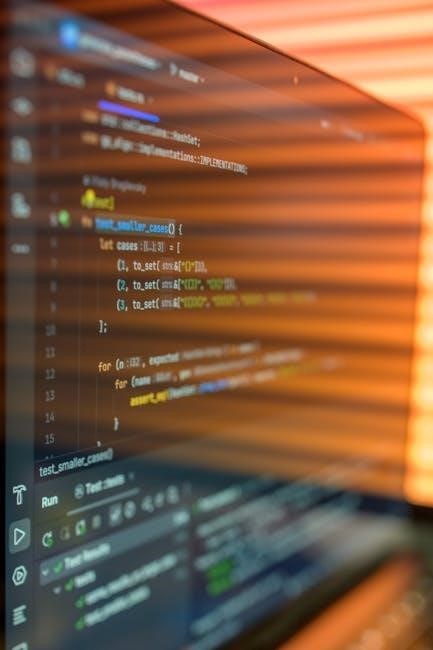
Implementing conditional logic is fundamental to PLC programming, and the Vista 20P utilizes IF/THEN/ELSE statements for this purpose. The programming manual dedicates significant attention to these control flow structures, explaining their syntax and practical applications. These statements allow the PLC to execute different code blocks based on whether a specified condition is true or false.
The manual details how to nest IF/THEN/ELSE statements to create complex decision-making processes. It also covers the use of logical operators (AND, OR, NOT) to combine multiple conditions within a single statement. Understanding the order of operations and proper boolean logic is crucial for accurate program behavior.
Furthermore, the guide illustrates how to use ELSEIF clauses to evaluate multiple conditions sequentially. Proper implementation of these statements enables the creation of responsive and intelligent control systems capable of adapting to various operating scenarios. Examples within the manual demonstrate real-world applications, solidifying comprehension and facilitating effective program development.

Troubleshooting Common Programming Issues
Effective debugging is vital for a smooth workflow. This section provides techniques for identifying and resolving errors within your Vista 20P programs quickly.
Debugging Techniques
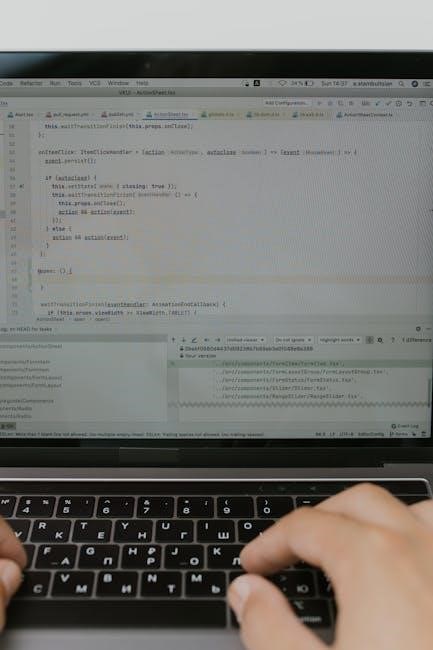
Effective debugging is paramount when working with the Vista 20P. Several techniques can significantly streamline the process of identifying and rectifying errors within your programmed logic. One fundamental approach is step-by-step execution, allowing you to observe the program’s flow line-by-line and inspect variable values at each stage. Utilize breakpoints strategically to pause execution at specific points of interest, facilitating focused analysis.
Monitoring variable values in real-time is also crucial. The Vista 20P programming software typically provides tools for observing variable states during runtime, helping pinpoint unexpected behavior. Don’t underestimate the power of simulated testing; before deploying to the physical system, thoroughly test your program in a simulated environment to catch potential issues early on.
Employing watch windows to track specific variables is highly recommended. Furthermore, carefully review error messages – they often provide valuable clues regarding the source of the problem. Finally, remember to document your debugging process; noting down steps taken and observations made can be invaluable for future troubleshooting efforts and knowledge sharing.
Error Code Interpretation
Understanding Vista 20P error codes is vital for efficient troubleshooting. These codes, displayed on the HMI or within the programming software, pinpoint specific issues within your control system. The programming manual’s appendix contains a comprehensive list detailing each code’s meaning, potential causes, and recommended corrective actions.

Error codes are categorized – hardware faults, communication errors, and programming logic flaws are common groupings. Don’t simply address the symptom; investigate the root cause. For example, a sensor input error might indicate a wiring problem, a faulty sensor, or an incorrect configuration within the program.
Always consult the manual before attempting repairs. Ignoring error codes or making assumptions can lead to further complications; Record the error code, the circumstances surrounding its occurrence, and any actions taken. This documentation aids in identifying recurring problems and refining your troubleshooting approach. Proper interpretation minimizes downtime and ensures system reliability.
Common Programming Mistakes and How to Avoid Them
Several common errors plague Vista 20P programmers, often stemming from oversight or misunderstanding. One frequent mistake is neglecting to properly define data types, leading to unexpected behavior and calculation inaccuracies. Another is incorrect addressing of I/O points, causing signals to be misinterpreted or ignored.
Insufficient commenting is a significant issue. Clear, concise comments explain the program’s logic, making it easier to debug and maintain. Always document your code! Forgetting to enable or disable interrupts can also create timing conflicts and unpredictable results.
To avoid these pitfalls, adopt a structured programming approach. Utilize meaningful variable names, thoroughly test each section of code, and leverage the manual’s examples. Regularly review your work and consider peer review. Careful planning and attention to detail are key to creating robust and reliable Vista 20P programs.
Resources and Support
Numerous avenues exist for Vista 20P support. Explore online forums, contact dedicated technical assistance, and consult the comprehensive FAQ section for quick resolutions.
Online Forums and Communities
Engaging with the vibrant online community surrounding the Vista 20P is an invaluable resource for programmers of all skill levels. Several dedicated forums and community platforms host active discussions, troubleshooting threads, and shared knowledge bases specifically focused on the Vista 20P system and its programming intricacies.
These platforms provide a space to ask questions, share solutions, and learn from the experiences of other users. Often, you’ll find answers to common programming challenges, insights into advanced techniques, and even user-created code examples. Searching existing threads can frequently resolve issues faster than waiting for official support responses.
Popular forums often feature sections dedicated to specific programming languages supported by the Vista 20P, such as Ladder Logic, Function Block Diagram, and Structured Text. Active participation and a willingness to contribute to the community can significantly enhance your understanding and problem-solving abilities. Remember to adhere to forum guidelines and maintain respectful communication when interacting with other members. Links to recommended forums can often be found on the manufacturer’s official website or through online searches.
Contacting Technical Support
When facing complex programming issues with the Vista 20P that cannot be resolved through self-help resources, contacting official technical support is a crucial step. The manufacturer provides several avenues for reaching their support team, ensuring assistance is readily available when needed.
Typically, support can be accessed via phone, email, or through an online support portal. The online portal often allows for submitting detailed support tickets, including relevant error codes, screenshots, and a comprehensive description of the problem. This detailed information helps the support team diagnose and resolve the issue efficiently.
Before contacting support, it’s beneficial to have your Vista 20P system’s serial number and software version readily available. This information allows the support team to quickly identify your specific configuration and provide tailored assistance. Be prepared to clearly articulate the problem you’re experiencing and any troubleshooting steps you’ve already taken. Response times may vary depending on the support channel and the complexity of the issue, but a well-documented request will expedite the resolution process.
Frequently Asked Questions (FAQ)
Here are some common questions regarding the Vista 20P programming and its associated manual:
Q: Where can I find the latest version of the programming manual? A: Check the manufacturer’s official website, specifically the ‘Support’ or ‘Downloads’ section. Updates are frequently released.
Q: Is the PDF manual searchable? A: Yes, the official PDF manual is fully searchable, allowing you to quickly locate specific functions or troubleshooting steps.
Q: What if I can’t open the PDF? A: Ensure you have a current PDF reader installed (e.g., Adobe Acrobat Reader). Try downloading the file again, as the initial download may have been corrupted.
Q: Does the manual cover all Vista 20P models? A: Generally, yes, but always verify the manual’s compatibility with your specific model number. Minor variations may exist.
Q: Are there example programs included? A: The manual often includes basic example programs to illustrate key programming concepts and get you started quickly.
Be First to Comment